GRAPHIC DESIGNER, COPYWRITER, MARKETER
Meet Wildfire: A Pop-Up Playground Experience.
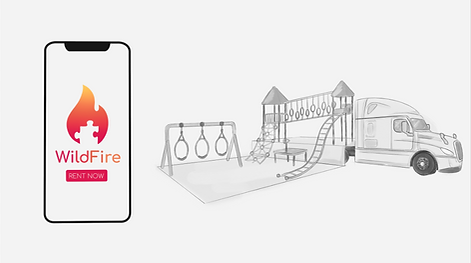
I participated in SCAD StartUp for the first time in 2021. Inspired by the prompt think global, act local, my team created Wildfire, a mobile playground that can travel to any hyperlocal community but especially reach those in playground deserts. After presenting to the judges, we placed third out of 85 teams.

When researching global problems surrounding playgrounds three main challenges are seen. First, children today do not get the proper amount of exercise. In fact, less than 24% of children participate in the recommended amount of physical activity. Second, children in today's world are more sheltered from physical and creative exploration than they ever have been in the past because of a lack of “risky play”. Third, some children don’t have To access to any form of play equipment at all. The term “playground desert” is new but painfully exemplified all across America. 4 out 5 children in the United states do not have access to a playground within walking distance. This means our total addressable market is 80% of children in the US.

Playgrounds have been engineered over the last half a century to be too safe and protective- a great comfort to parents, but much to the detriment of the child. Play that involves risk-taking, exploration, and problem solving is shown to be more developmentally beneficial than the monotony of swings and slides. The concept of the “Adventure Playground,” a space filled with junk and tools where kids can create their own playground, has been around for many years. They’ve seen incredible reception in Europe. but haven’t been implemented in the US.Parents sometimes feel hesitant when presented with riskier play, but studies like Studio Ludo’s London Study of Playgrounds shows that London playgrounds, which encourage riskier play, have 53% more visitors, 16-18% higher physical activity levels, and even fewer injuries among children and teens when compared to other play spaces in the US. In order to introduce this kind of play locally, we sought to strike a balance between more traditional play and adventure play.
Playgrounds as we know them are full of boundaries, and kids like to test those boundaries, but when we remove the boundaries, they learn to be more cautious, perceptive, and imaginative. After all, as the woman who brought Adventure playgrounds to England said, “Better a broken bone, than a broken spirit.” Our team sought a way to bring better play to more children, and remove boundaries keeping any child from the play experience they deserve.
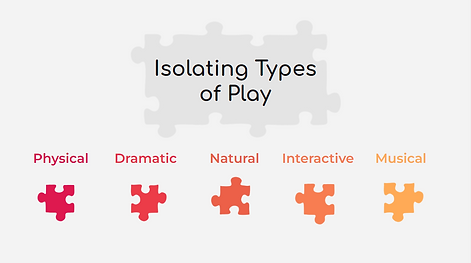
In creating our solution, we found that children require 5 different types of play to properly reinforce their development, and conventional playgrounds rarely ever include all 5. Our solution would thus include better play that encourages more physical activity and risk-taking, more accessible play reaching into playground deserts, and the 5 types of play to bolster child development, breaking the conventional idea of what a playground should be.


What we came up with is Wildfire: a pop-up playground experience. The idea is that the mobile playground can travel to any hyperlocal community but especially reach those in playground deserts. We asked a child in our target audience how she would feel if she saw our truck pull up to her neighborhood, and to say the least, she was ecstatic. The equipment itself would be unlike that of conventional playgrounds, becoming a modernized, more engaging experience not only for the child’s physical well-being, but the mental one as well. The traveling playground would only be the first project in a line of innovations that break the tension between parent discomfort and exploration through risk. By introducing these new ideas through such a portable platform, we envision this style of play spreading like wildfire.